
Dubai Crisis 2026: Impact of Iran War on UAE Economy, Business, Amazon & Online Platforms:
Introduction: Dubai Under Pressure Amid Iran War:
The ongoing 2026 Iran war has significantly impacted the United Arab Emirates (UAE), especially Dubai, one of the world’s leading global business hubs. What was once considered the safest and most stable region for investors, tourism, and ecommerce is now facing geopolitical instability, supply chain disruptions, and economic uncertainty.
Since February 28, 2026, Iran has launched hundreds of missiles and thousands of drones targeting UAE infrastructure, including areas in Dubai and Abu Dhabi . This escalation has triggered global economic concerns, especially for Amazon sellers, ecommerce businesses, logistics companies, and investors.
1. Current Situation in Dubai (2026 Iran War)
Reuters
UAE equities decline on Iran’s retaliation warning on Gulf energy, water infrastructure
Today
The Guardian
Iran vows to destroy Middle East water and energy facilities if US attacks power plants
Today
The Times of India
‘Far from being ghost town’: Indian founder defends Dubai as panic over city’s life circulates online
Today
The Wall Street Journal
Strait of Hormuz, Other Gulf Waters at ‘Critical’ Threat Level, UKMTO Says
Today
1.1 Military & Security Situation
UAE has intercepted missiles and drones targeting major cities
Iranian attacks include:
Ballistic missiles
Drone swarms
Cruise missile strikes
Key areas affected:
Palm Jumeirah
Dubai Marina
Near Burj Al Arab
Damage includes residential areas, hotels, and commercial infrastructure .
Despite this, UAE defense systems intercept 90%+ of threats, maintaining partial stability .
1.2 Reality vs Panic
There is widespread misinformation online suggesting Dubai is collapsing.
Reality:
Dubai is still operational and functioning
Businesses are running
Government maintaining strong control
However:
Risk level has increased
Investor confidence is slightly shaken
Reports confirm Dubai is “not a ghost town” despite tensions .
2. Economic Impact on Dubai & UAE
2.1 Stock Market & Financial Decline
Dubai stock index dropped 2.7%
Major companies facing losses
Energy and banking sectors under pressure
This decline is linked to Iran’s threat to Gulf energy infrastructure .
2.2 Real Estate Crisis Emerging
Property transactions dropped:
37% YoY
49% MoM
Luxury properties seeing 12–15% discounts
Dubai’s reputation as a safe investment hub is weakening.
2.3 Oil, Shipping & Strait of Hormuz Risk
One of the biggest global risks:
Strait of Hormuz closure threat
Handles ~20% of global oil supply
Iran threatened to shut it completely
Impact:
Fuel prices rising globally
Shipping delays
Trade disruptions
Maritime threat level is now “critical” .
2.4 Tourism & Expat Decline
Tourists leaving UAE
Hotel bookings dropping
Expats relocating
Dubai’s service economy is heavily dependent on:
Tourism
Foreign workforce
This creates long-term economic pressure .
3. Impact on Amazon, Ecommerce & Online Business
This is the most important section for you (Amazon business focus).
3.1 Amazon UAE & Ecommerce Disruptions
Logistics & Supply Chain Risks
Shipping routes disrupted
Air cargo delays due to airspace restrictions
Sea freight risk due to Hormuz tensions
This directly impacts:
Amazon FBA inventory flow
Stock replenishment timelines
Cost of shipping
3.2 Warehousing & Infrastructure Risk
Reports of data center and infrastructure impact during strikes
Risk to:
Warehouses
Fulfillment centers
Ports (Jebel Ali)
3.3 Increased Operational Costs
Fuel price increase
Higher logistics cost
Insurance premiums rising
Result:
Lower profit margins
Higher product pricing
3.4 Amazon Seller Risks in UAE (2026)
Major Risks:
Inventory Delays
Stockouts due to shipping disruptions
Increased PPC costs (competition drops but cost rises)
Currency & economic instability
Demand fluctuation
3.5 Demand Side Changes
Consumer behavior shifts:
Increased demand:
Essentials
Survival goods
Tech & remote work tools
Decreased demand:
Luxury products
Non-essential items
3.6 Opportunity for Online Business
Despite risks, ecommerce still survives.
Example:
Crypto and digital businesses remain stable due to remote operations
Reason:
Cloud-based systems
Global customer base
Remote teams
4. Business Risk Analysis (Dubai 2026)
4.1 High-Risk Sectors
Tourism
Real estate
Aviation
Logistics
4.2 Medium Risk
Ecommerce (Amazon, Noon)
Retail
4.3 Low Risk
Digital services
SaaS
Crypto & remote businesses
5. Global Impact of Dubai Crisis
The Dubai situation is not local — it’s global.
Key Global Effects:
Oil prices rising
Inflation increasing
Supply chain disruption worldwide
Stock market volatility
If war escalates:
Could trigger global recession scenario
6. Future Outlook: What Will Happen Next?
Scenario 1: War De-escalation
Markets recover
Dubai regains trust
Ecommerce stabilizes
Scenario 2: Prolonged Conflict
Economic slowdown
Business migration
Real estate crash
Scenario 3: Full Regional War (Worst Case)
Strait of Hormuz closure
Global oil crisis
Severe ecommerce disruption
7. Strategic Advice for Amazon Sellers (IMPORTANT)
If You Are Selling in UAE:
Immediate Actions:
Increase inventory buffer
Use multiple suppliers
Shift some stock to other marketplaces
Smart Strategy:
Expand to:
USA
UK
Australia
Risk Diversification:
Don’t rely 100% on UAE
Build global brand presence
Conclusion
Dubai is not collapsing, but it is under serious geopolitical and economic pressure due to the Iran war. The situation is stable but fragile.
For businesses, especially Amazon sellers, this is a high-risk but still manageable environment — if you plan smartly.
The biggest lesson:
Don’t depend on one market — diversify globally
Amazon UAE Update – 18 March 2026:
Amazon UAE Update – 18 March 2026:
1. 🚨 Operations Still Not Fully Stable
Amazon UAE is still facing disruptions due to the recent regional conflict.
Earlier drone/missile strikes damaged AWS data centers in UAE, affecting systems and infrastructure.
Recovery is ongoing, but full stability has NOT returned yet.
2. 📦 Deliveries & Orders Situation
Delays are still happening in deliveries and returns.
Some areas previously had temporary suspension of deliveries (especially Abu Dhabi).
Sellers are reporting:
Orders stuck in pending
Late dispatch & delivery
Customer cancellations increasing
👉 As of today:
Deliveries are partially active, but not reliable yet
3. 🏢 Warehousing & Logistics
Fulfillment centers were impacted earlier and:
Some operations paused or slowed
Logistics network still recovering step by step
4. ☁️ Backend (AWS) Impact
Amazon’s backend systems (AWS) faced:
Power outages
Fire damage
Connectivity issues
👉 This affects:
Seller dashboards (sometimes slow)
Order processing delays
Inventory syncing issues
5. ✈️ Overall UAE Situation Impacting Amazon
UAE still facing security alerts and occasional disruptions (airports, logistics routes)
This directly affects:
Shipping speed
Last-mile delivery
Supply chain movement
UAE Port & Amazon Update – 17 March
2026
Current Situation (Major Development):
The situation is still unstable and disrupted due to ongoing Middle East conflict, especially around the Strait of Hormuz, which is a critical shipping route.
Impact on Ports (Important for Amazon Sellers)
1. Port Operations
Major hubs like Jebel Ali faced disruptions earlier and are still not fully stable
Alternative ports (Fujairah, Khor Fakkan) are being used but:
Limited capacity
Heavy congestion
Delays increasing daily
2. Shipping & Freight
Many global shipping companies have:
Stopped or paused bookings
Rerouted shipments via other countries
Freight cost has increased significantly
Transit time is becoming unpredictable (can double)
Amazon UAE Situation (Seller-Level Impact)
1. Fulfillment & Delivery
Amazon has:
Closed Abu Dhabi fulfillment operations earlier
Suspended or delayed deliveries in multiple areas
Orders are:
Delayed
Stuck in pending
Getting canceled
2. Inventory Movement
New shipments into UAE are:
Slowed down
In some cases paused by sellers and logistics companies
FBA replenishment is highly affected
3. Ads & Sales
Conversion rate is unstable because:
Delivery timelines are unclear
Customer trust is temporarily low
Key Insight (Very Important)
This is not just a port issue, it is a full supply chain disruption involving:
Ports
Air cargo
Warehouses
Amazon operations
What Sellers Should Do (Strategic Advice)
Short-Term (Next 1–2 Weeks)
Reduce or control PPC spend
Avoid sending new inventory to UAE
Monitor delivery performance closely
Mid-Term
Shift focus to:
Saudi Arabia
USA
UK markets
Logistics Strategy
Use alternative routes if necessary
Work with freight forwarders for updated routes
Expected Outlook
Situation is still uncertain
No confirmed full recovery timeline yet
Delays and disruptions likely to continue for the coming weeks if conflict persists
Situation on 16 March 2026:
1️⃣ Jebel Ali Port (Dubai) — Operational but traffic reduced
The UAE’s main logistics hub Jebel Ali Port is still operational, but incoming vessel traffic has dropped significantly because ships are avoiding the Gulf due to security risks.
Many shipping companies paused or rerouted cargo passing through the Strait of Hormuz, which is causing container shortages and delays in the UAE.
➡️ Effect on Amazon shipments:
Containers arriving in Dubai are slower and fewer, which directly delays inventory reaching Amazon warehouses.
2️⃣ Amazon logistics network disruption (still ongoing)
Amazon earlier closed or limited operations in a fulfillment center in Abu Dhabi, reducing logistics capacity across the UAE marketplace.
The disruption is affecting hundreds of thousands of third-party sellers relying on Amazon logistics in the region.
➡️ Sellers are reporting:
FBA shipments taking longer to check in
Orders stuck in “Pending” status
Delivery estimates extended
3️⃣ Shipping times (current estimates)
Because of the regional conflict and shipping reroutes:
Amazon cross-border deliveries: ~35–45 days now
Previously: ~25–35 days
Average increase: about +10 days.
4️⃣ Additional disruptions in the UAE logistics network
Drone debris and attacks near Fujairah Port forced temporary suspension of some operations recently, adding pressure to alternative shipping routes.
An earlier incident also caused a fire and shutdown at an Amazon cloud data center in the UAE, affecting parts of Amazon’s regional systems.
Important update for 14 March 2026 that is relevant for Amazon sellers shipping to the UAE:
1️⃣ Shipping routes still disrupted
The ongoing conflict in the Middle East has significantly disrupted global shipping. The Strait of Hormuz, a key route used for cargo entering the Gulf region, is facing security threats and reduced vessel traffic. Many shipping companies are avoiding the area or rerouting vessels.
👉 Because of this:
Ships are delayed before entering Gulf ports
Containers are being rerouted to other ports
Global logistics costs and delivery times are increasing
2️⃣ Cargo delays and port congestion
More than 100 ships are reportedly stranded or rerouted, and many carriers have paused routes or changed schedules due to safety concerns.
This means:
UAE inbound shipments are slower than normal
Some containers are waiting outside Gulf waters
Many logistics companies are holding shipments temporarily
3️⃣ Security tensions in the Gulf
Iran has threatened retaliation against facilities linked to the US in Gulf countries, including the UAE, which is raising security concerns in the region.
Because of this risk:
Shipping insurers increased war-risk fees
Some carriers suspended bookings to certain Gulf ports
Logistics companies are monitoring the situation daily
4️⃣ What it means for Amazon UAE sellers
For sellers (especially FBA or FBM shipments):
📦 Expect delays
Delivery times may increase
Some shipments might stay in transit longer
📊 Inventory planning is critical
Sellers with local UAE stock have advantage
New shipments may take extra days or weeks
💰 Freight cost pressure
Shipping prices may rise due to rerouting and risk fees
5️⃣ Small positive development
A new feeder shipping service from Karachi to UAE has been announced to help improve regional cargo movement. This may help reduce delays for Pakistan-UAE trade in the coming weeks.
13 March 2026 – Latest Situation in UAE:

On 13 March, debris from an intercepted drone hit a building at the Dubai International Financial Centre (DIFC) Innovation Hub.
The impact damaged part of the building’s facade, but no injuries were reported.
This incident is part of the ongoing drone and missile activity in the region during the Iran–U.S./Israel conflict, which has been causing intermittent security incidents across the UAE.
What This Means for Amazon UAE (13 March)
As of 13 March:
Amazon UAE (Amazon.ae) is still operational.
No official report says Amazon warehouses closed again on this date.
However, security incidents in Dubai continue, which keeps logistics and shipping in a sensitive situation.
Ports and logistics routes are still experiencing reduced traffic and caution due to the regional conflict.
12 March Update:
1. Iran Labels Amazon as a ‘Legitimate Target’
Iran’s state‑linked sources reportedly named Amazon, along with other major tech companies (like Google and Microsoft), as potential targets amid continuing regional conflict.
📌 2. Ongoing Tensions & Broader Tech Targeting Concerns
Reports today also highlight that tech companies, including Amazon, could face threats as regional tensions widen.
📌 3. Internal Company News (Non‑UAE but Relevant)
Amazon is reportedly introducing new internal policy changes affecting engineers, code deployment, and management — an operational update reported today.
Today’s Highlights – March 11, 2026:
As of March 11, 2026, Amazon Web Services (AWS) is experiencing ongoing, severe service disruptions in the UAE and Bahrain following direct drone strikes on its data center infrastructure that occurred on March 1, 2026.
TheBanker.com
+1
Key Updates as of March 11, 2026:
Persistent Disruptions: AWS reports that problems with data centers in the UAE and Bahrain are continuing.
Infrastructure Damage: Two UAE facilities were directly struck, causing structural damage and interrupting power, while another in Bahrain was impacted by a nearby strike.
Operational Impact: The strikes have led to high failure rates for data ingest and egress, prompting Amazon to advise customers to move data to other regions.
Extended Delivery Times: Due to the regional instability and damage, Amazon has warned of extended delivery times for customers in the UAE, Saudi Arabia, Kuwait, and Bahrain.
Regional Instability: The attacks are tied to broader regional conflicts, making the operating environment unpredictable
10 March 2026 – UAE Port & Shipping Update:
1. Strait of Hormuz situation
The Strait of Hormuz is still largely blocked for commercial shipping due to the ongoing war.
Ship traffic has dropped close to zero, and more than 150 vessels are stranded or waiting outside the Gulf.
Major shipping companies like Maersk, MSC, and CMA-CGM suspended routes to Gulf ports because of security risks.
👉 This is the main reason China → UAE containers are delayed.
2. UAE Ports Status (Important)
Jebel Ali Port – Dubai
Good news:
Jebel Ali port itself is OPEN and operating normally.
The port resumed full operations after a short suspension earlier in March.
But the problem is shipping access, not the port.
Reality right now:
Few container ships are entering the Gulf.
Insurance companies increased war-risk charges.
Many vessels are avoiding the route.
DUBAI, United Arab Emirates (AP) — Iran launched new attacks on Tuesday at Gulf Arab countries as it kept up pressure on the Middle East in a war that has sent oil prices surging and stunned global economies. Five pro-Iranian militiamen were killed by an airstrike in northern Iraq.
Incoming missile sirens sounded early in the morning in Dubai in the United Arab Emirates, and in Bahrain, while Saudi Arabia said it had destroyed two drones over its oil-rich eastern region and Kuwait’s National Guard said it had shot down six drones.
In addition to firing missiles and drones at Israel and at American bases in the region, Iran has also been targeting energy infrastructure which, combined with its stranglehold on the Strait of Hormuz, has sent oil prices soaring.
Brent crude, the international standard, spiked to nearly $120 on Monday before falling back but was still at around $90 a barrel on Tuesday, nearly 24% higher than when the war started on Feb. 28.
U.S. President Donald Trump, who has previously said that the war could last for a month or longer, on Tuesday sought to downplay growing fears that it could be a long-term regional conflict, saying it was “going to be a short-term excursion.”
What happened today (9 March 2026):
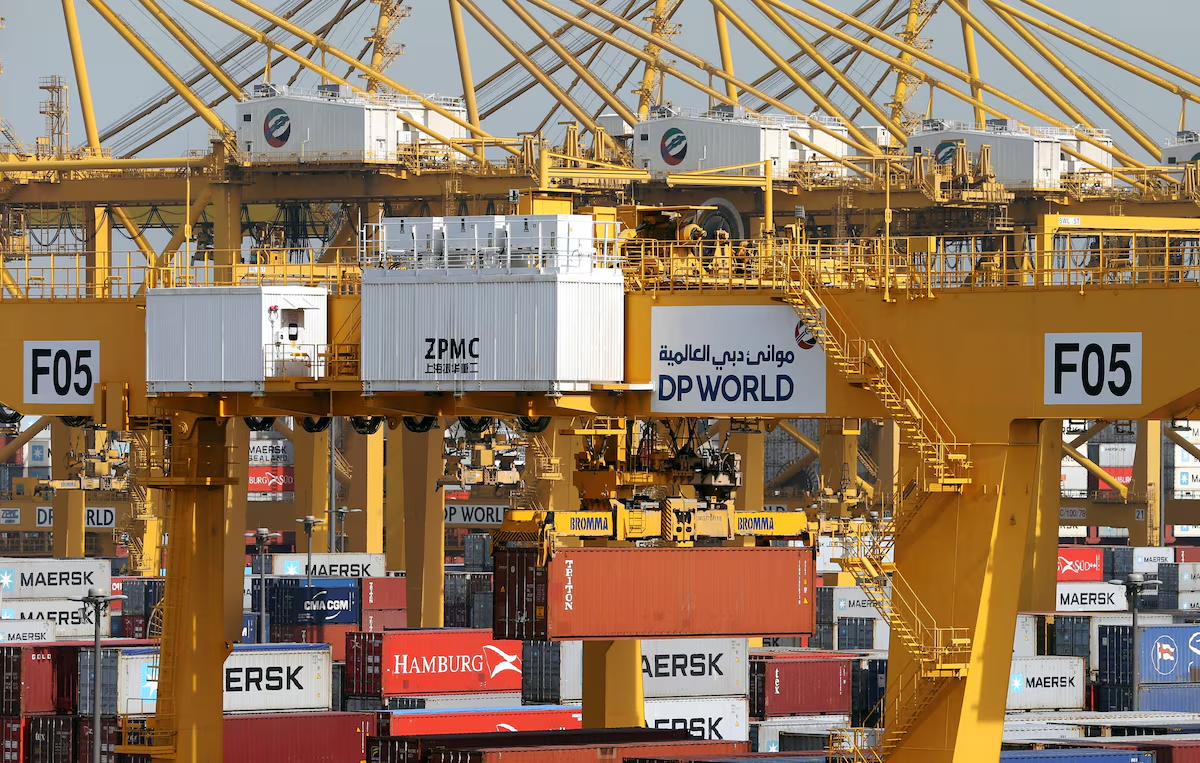

- UAE ports are working again
After a temporary suspension earlier, Jebel Ali port resumed operations with high security.
Cargo is still moving but slower than normal.
- Ships are avoiding the main route
Many shipping companies are not entering the Persian Gulf because of security risks in the Strait of Hormuz.
- Alternative routes are being used
Logistics companies are sending containers to other UAE ports like Khorfakkan and Fujairah, then moving cargo by truck to Dubai.
- Huge delays and extra cost
Hundreds of vessels are waiting outside the Gulf because they cannot safely pass the Hormuz route.
Shipping lines added war-risk surcharges of $1,500–$4,000 per container.
- Freight prices skyrocketing
Container freight rates to the Middle East have increased massively due to the conflict and route disruption.